Shopify Store

It seems like you might be referring to Shopify, an e-commerce platform that allows businesses to create online stores and sell products. With Shopify, users can customize their store's design, manage inventory, process orders, and handle payments. It's a popular choice for businesses of all sizes looking to establish or expand their online presence. If you have any specific questions about Shopify or need assistance with anything related to it, feel free to ask!

Shopify sale
- Integration with ecommerce: If you run an online store, your blog product pages are vital. You can easily link to products from your blog posts and vice versa.
- SEO tools: Shopify offers various built-in SEO that help optimize your blog posts for search engines, improving your visibility and ranking
- Ease of use: Shopify’s user-friendly interface simplifies creating and managing blog content, making it accessible even to those without technical skills.
- Customized themes: You can customize numerous available themes to align with your brand’s aesthetic, improving the overall customer experience.
- App integrations: Shopify’s extensive app store includes many blogging tools and plugins to improve your blog’s functionality, such as social media sharing, email marketing, and analytics.
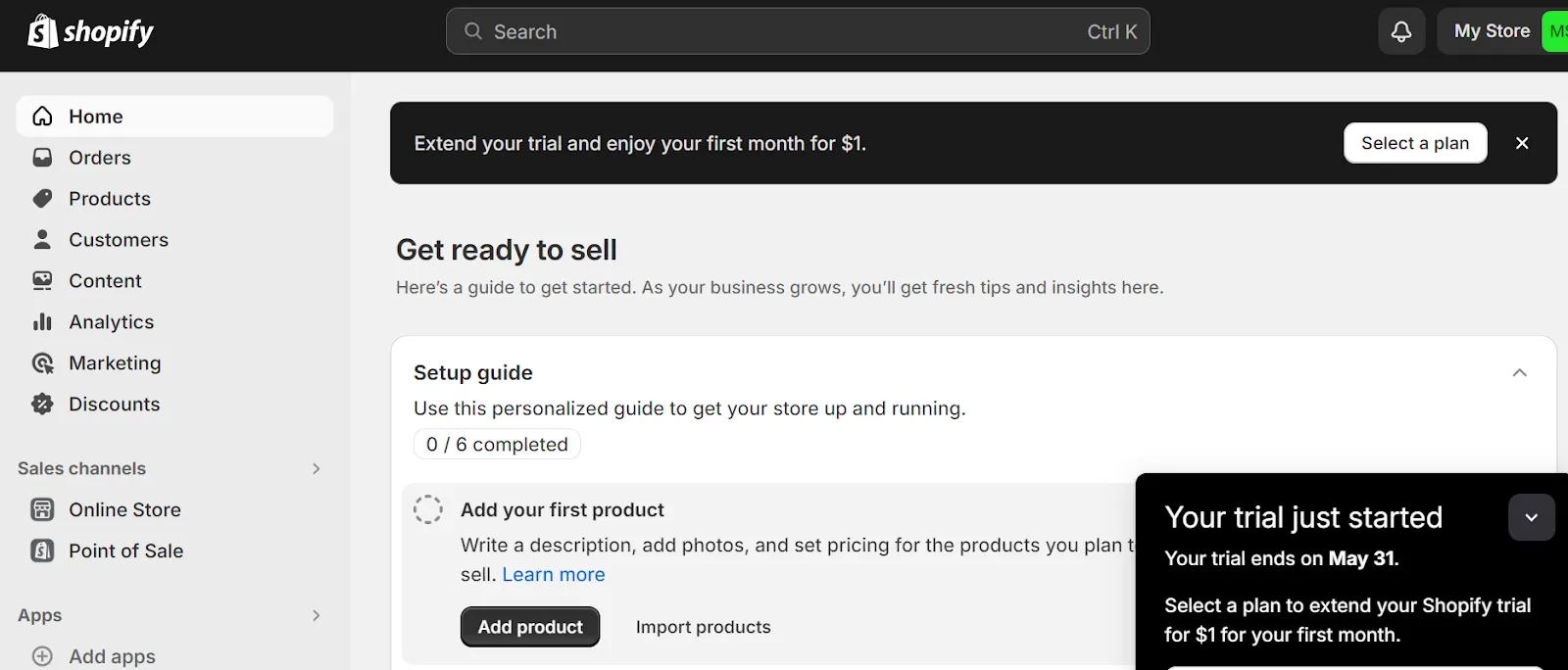
Step 1: Log in to Shopify Account
- Log into your Shopify Admin account.
ou might have been wondering does Shopify have a blog option, and after learning it does, you are eager to know if are there any limitations to Shopify’s native blog.
When compared to dedicated CMS like WordPress, Shopify's blogging function exhibits certain limitations that could affect your content strategy and execution.
How to start a blog on Shopify? The answer to that question begins with a clear strategy and understanding of your content objectives.
Before you dive into creating content, it's essential to define your target audience, the type of content that will resonate with them, and how your blog can serve both your brand's and your audience's needs. Once you have a solid plan in place, the technical steps to start blogging on Shopify are straightforward.
Keyword research is foundational in crafting your content strategy. It involves identifying the terms and phrases your target customers use when searching for products or information related to your industry.
Let’s imagine your Shopify store is specializing in t-shirts. Your keyword research might lead you to include keywords such as "fashionable t-shirts," "eco-friendly t-shirts," "how to style graphic tees," and so on.
Tools such as Google Keyword Planner, Ahrefs, or SEMrush can help identify relevant keywords with high search volume but moderate to low competition, making it easier to rank in search engine results pages (SERPs).
Knowing your audience goes beyond demographic data. It's about understanding their lifestyle, preferences, challenges, and what they value in a product.
For a t-shirt store, your audience might value sustainability, originality in design, or the versatility of the product.
This understanding shapes the topics you choose and the angle you approach them from, ensuring your content resonates with and appeals to your target customers.
Example: Starting a Shopify Blog for a T-shirt Store
With keywords identified and a deep understanding of your audience, it's time to brainstorm content ideas.
For a t-shirt Shopify store, topics could range from fashion tips to sustainability in the clothing industry, depending on what aligns with your brand and audience interests. Here are a few content ideas that could appeal to potential customers:
Creating great content is just the first step; promoting it is crucial to ensure it reaches your target audience.
Utilize your social media channels, email newsletters, and even paid advertising to drive traffic to your blog. Engaging with your audience through comments or social media can also help build a community around your brand.


Comments
Post a Comment